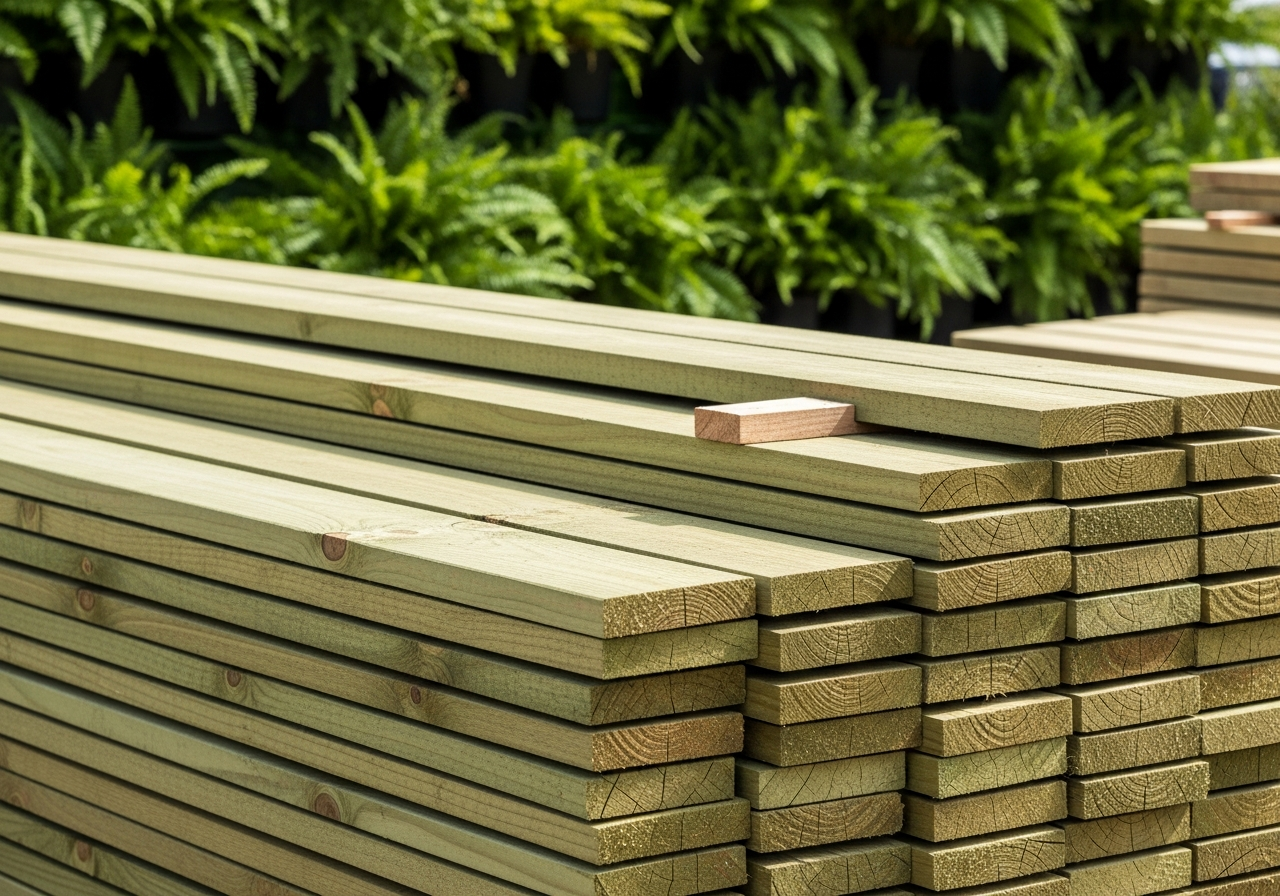
Free timber, a proper bit of graft, and a shed that owes you next to nothing — as long as you pick the right pallets and treat them before winter.
To build a shed from pallets: collect 20–30 matching, heat-treated (HT-stamped) pallets, dismantle the ones you need into boards and bearers, stand the shed on a firm, level base, frame the walls and roof from pallet timber, then weatherproof it with an OSB roof deck, felt and a coat of preserver. Two things decide whether it lasts: pick HT, not MB, and treat every piece before it goes outside.
A pallet shed is one of the most satisfying builds going — you turn a stack of stuff that was headed for the skip into something genuinely useful. But "free" is doing a lot of heavy lifting in that sentence. The timber costs nothing; the hours are the price. Do it with your eyes open, pick the right pallets, and you'll end up with a sturdy store, log shelter or potting shed. Cut the corners on the base or the treatment and you'll be rebuilding it in two years.
They're everywhere once you start looking — but the golden rule is always ask first. A lot of pallets are owned and get returned for a deposit, so taking one off a yard can land you in bother.
Supermarkets, garden centres and the big DIY sheds get deliveries on pallets daily. Ask at the goods-in door or for the duty manager — many are glad to see them go.
Warehouses, trade counters and small factories stack up odd and broken pallets by the bin store every week. A polite ask usually does it.
Search "free pallets" on Facebook Marketplace, Gumtree and Freecycle/Freegle. Be quick — the good batches go within the hour.
Pallet recycling firms often give away ones too damaged to resell. Perfect for breaking down into boards rather than using whole.
Don't take coloured pallets. Blue (CHEP), red (LPR) and brown (IPP) pallets belong to rental pools — they're hired, not free, and walking off with them is theft. Stick to plain, unbranded wooden pallets that a business has genuinely finished with.
This is the bit most "pallet shed" guides skip, and it matters. Pallets that travel internationally are treated to kill pests, and the treatment is stamped on the side inside the round IPPC mark (look for the little ear-of-wheat logo, a country code and a code letter). That code tells you whether the pallet is safe to handle and saw.
| Stamp | What it means | Use it? |
|---|---|---|
| HT | Heat-treated — simply baked to 56°C to kill pests. No chemicals. | ✅ Yes — the one to look for |
| KD | Kiln-dried — dried in an oven, no chemicals. | ✅ Fine |
| DB | Debarked — just means the bark was removed. Often shown as "HT-DB". | ✅ Fine |
| MB | Methyl bromide — fumigated with a toxic pesticide. | ❌ No — avoid completely |
| No stamp | National-use only; treatment unknown. | ⚠️ Risky — only for rough outdoor use, never if you'll spend hours inside |
Never use a pallet stamped MB. Methyl bromide was banned for pallet treatment in the UK and EU back in 2010, but older and imported pallets still turn up carrying it. Sawing one releases the residue into your workshop. If you see MB, leave it. When in doubt, only take pallets that clearly show HT.
Stamp aside, give every pallet the once-over: walk away from anything stained, oily, greasy or mouldy — it may have soaked up a chemical spill — and reject split, soft or rotten boards. A clean, dry, HT-stamped pallet is exactly what you want.
The single most tedious part of the whole job — and the difference between usable boards and a pile of firewood is doing it patiently. The full tools list is here, but for breaking pallets you mainly want a pry bar, a claw hammer, a nail punch, and ideally a reciprocating saw.
The fastest, board-saving method is a reciprocating saw with a metal-cutting/demolition blade: slide it between each top board and the bearer underneath and shear the nails. You keep full-length boards and lose far fewer to splits.
No saw? Work a pry bar or a dedicated pallet-buster under each board close to the nails and lever evenly from both ends so it lifts flat. Levering from the middle is how boards snap.
Pull the proud ones with pincers; knock the rest right through or punch them flush. Drop them straight in a tub — a single missed nail will blunt a saw blade or a planer in one pass.
Stack long straight boards, short boards and the chunky bearers separately. The thick bearers make excellent floor joists and corner posts; the thin top boards become cladding.
Gloves on, and keep your jabs up to date. Pallets are a forest of rusty nails and dry splinters — heavy work gloves and eye protection aren't optional, and a rusty-nail scratch is exactly the tetanus risk it sounds like.
There are two schools of pallet-shed building: stand whole pallets up as ready-made wall panels (fast, but thick and gappy), or dismantle them and build a normal stud frame clad in pallet boards (neater and far more weatherproof). Most good results mix the two.
A pallet is not a base. You still need firm, level, free-draining ground — read the shed base guide first. Then sit your floor on something that keeps it clear of the wet: paving slabs or concrete blocks under the bearers work well. Use the heavy pallet bearers as joists and deck over the top with reclaimed boards or, better, a sheet of OSB for a flat, solid floor.
For whole-pallet walls, stand pallets on end, line up the tops, and bolt or screw them to each other and down to the floor frame — then you must add a weatherproof skin, because the gaps let in wind and rain. For a tidier shed, build stud-wall frames from the bearers and clad them with overlapping pallet boards like featheredge. Add a breathable membrane behind the cladding either way.
Make rafters from the straightest, strongest pallet timber — double it up (sister two pieces) and keep the span short, as pallet wood is thinner and weaker than proper roofing timber. Give it a fall so water runs off. Don't try to make a weatherproof roof from gappy boards: deck it with OSB, then cover that with felt. The roof is the one place to spend money, not salvage.
"Free" pallet timber gets you the frame and cladding. These are the bits you can't salvage if you want a shed that survives a British winter — and they're cheap next to the cost of rebuilding.
As an Amazon Associate, ShedGuide earns from qualifying purchases. The product links below go to Amazon UK and help keep this guide free — they never change what you pay. The pallet timber is free; these are just the bits you can't salvage.
| What to buy | Why you need it |
|---|---|
| Wood preserver | Pallet wood is almost always bare. Treat every face before it goes outside, or it rots fast. |
| Exterior wood screws | Don't reuse bent, rusty pallet nails. Screw the frame together properly — it'll be far stronger. |
| OSB3 board (11mm) | A gap-free roof deck — and a flat floor. Pallet boards are too gappy to felt straight over. |
| Shed roofing felt | The actual weatherproof layer that goes over the OSB deck. Don't skimp here. |
| T-hinges | For a door that hangs square and doesn't drop. A galvanised pair is pennies. |
| Shed paint | Seals and protects on top of the preserver — and tidies up the patchwork look a treat. |
Reckon on roughly £80–150 all in for these, depending on shed size. Building from new timber instead? The full materials list has the lot.
Worth being honest with yourself before you start collecting. A pallet shed is brilliant for some jobs and a false economy for others.
Pallets are the right call for a rough-and-ready store. They're the wrong call when any of these are true:
Want something neat and watertight from the off? Build from new timber to a proper drawing. Our free 8×6 shed plan (PDF) gives you dimensioned drawings, a cut list and the build sequence — or the £9 premium pack adds 6×4 and 10×8. Far less faff than wrangling 30 pallets.
Almost. The floor frame, walls and cladding can all be pallet timber — but for a shed that lasts you'll still buy OSB for the roof deck, felt, exterior screws, preserver and a pair of T-hinges. Pallets are free timber, not a complete kit.
Check the IPPC stamp. HT means heat-treated — just baked, no chemicals, and the one you want. Avoid anything stamped MB (methyl bromide, a pesticide). Whatever the stamp, reject stained, oily or mouldy pallets too.
Roughly 20–30 standard pallets for a small 6×4-ish shed, depending on whether you use them whole or break them down. Collect extra of the same size — you'll reject a fair few for splits, twists and nail damage.
Yes — if you stand it on a firm base off the ground, treat every bare piece with preserver, and weatherproof the walls and roof. Untreated pallet wood sitting on damp soil rots within a couple of winters.
On materials, yes. But you'll still spend about £80–150 on felt, OSB, screws, preserver and paint, plus a lot of time. Pallets win when your hours are free; otherwise a budget kit can be better value.
Pick one size and stick to it. The UK standard is 1200×1000mm; the Euro/EPAL pallet is 1200×800mm. Consistency keeps your wall and floor bays uniform and the build sane.
Get the base right first, then grab a dimensioned plan and start building — pallet timber or new.